

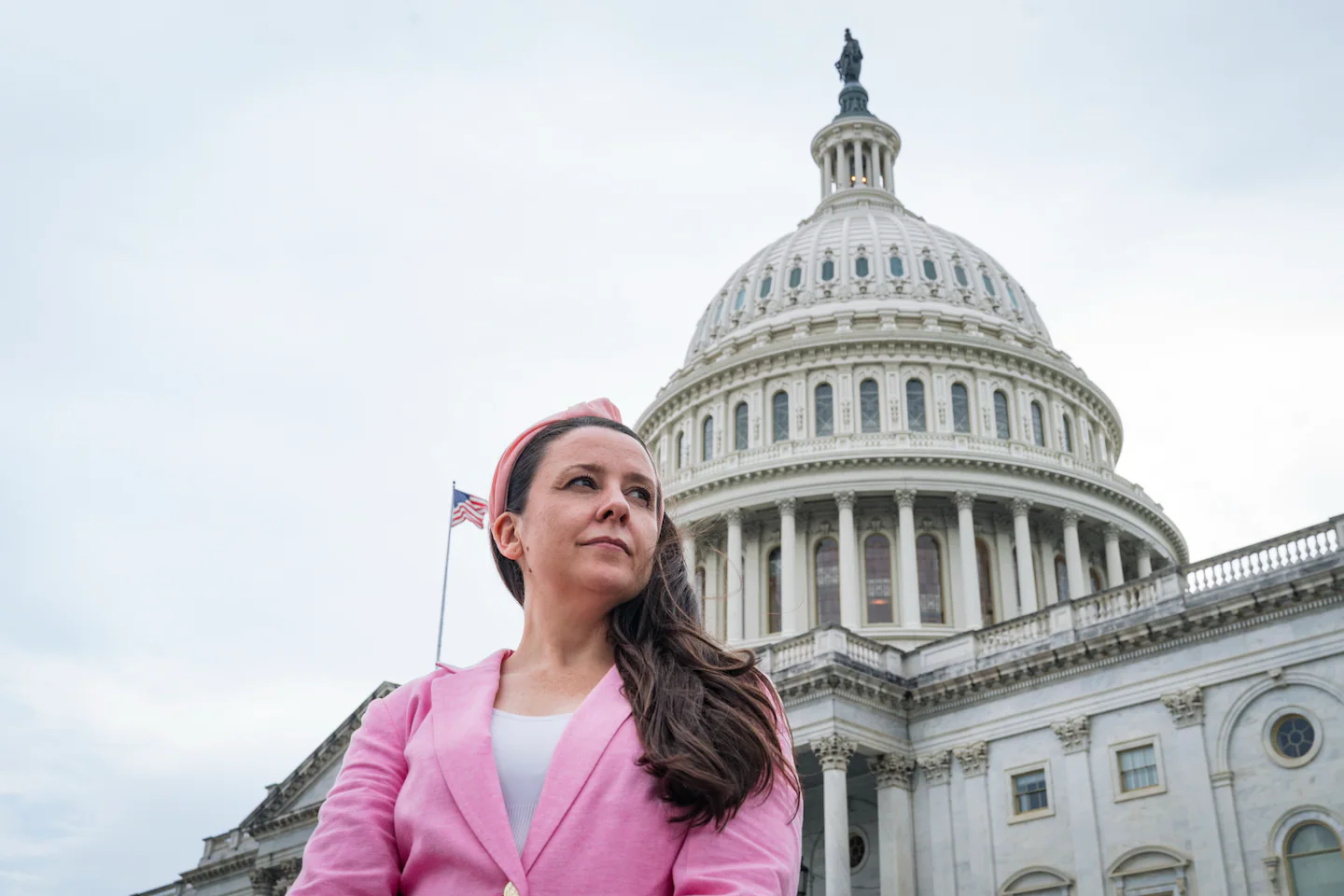
Children’s educator and social media star Ms. Rachel traveled to Capitol Hill this week carrying a powerful message from some of America’s most vulnerable young people. Wearing a bubblegum-pink linen suit and wheeling a black suitcase filled with stapled packets of handwritten letters and drawings, the children’s entertainer met with lawmakers to show them the artwork and letters created by children held in family immigration centers.
“I cry a lot,” read one letter from a 7-year-old boy held at the Dilley Immigration Processing Center in South Texas. “I want to get out of here.”

Among the illustrations were portraits of crying faces, families standing together behind bars and a red house that a 9-year-old child longed to return to. Ms. Rachel clutched one packet in her hand, ready to offer it to the first lawmaker she encountered.

According to advocates accompanying the visit, the artwork offered lawmakers a rare glimpse into the lives of children living behind detention center walls. Many of the drawings depicted families, homes, playgrounds, and scenes of freedom, while some letters expressed fears, loneliness, and a longing to return to normal childhood routines.
Ms. Rachel said the visit was intended to ensure that children affected by immigration policies are seen and heard by those making decisions that impact their lives.
“Children deserve safety, dignity, and the chance to simply be kids,” she said. “These letters and drawings are reminders that behind every policy debate are real children with dreams, feelings, and voices that matter.”

Immigration advocates praised the effort, arguing that family detention can have lasting emotional and psychological effects on children. They urged lawmakers to consider alternatives to detention and to prioritize policies that keep families safe while respecting children’s well-being.
The visit comes amid renewed national debate over immigration enforcement and the use of family detention facilities. While supporters of the facilities argue they are necessary to manage immigration cases and maintain border security, critics contend that children should not be held in detention-like settings for extended periods.
For many lawmakers, the colorful drawings and heartfelt letters served as a stark reminder that immigration policy is not only a political issue but also a deeply human one. As congressional debates continue, advocates hope the children’s messages will help keep their experiences at the center of the conversation.
