

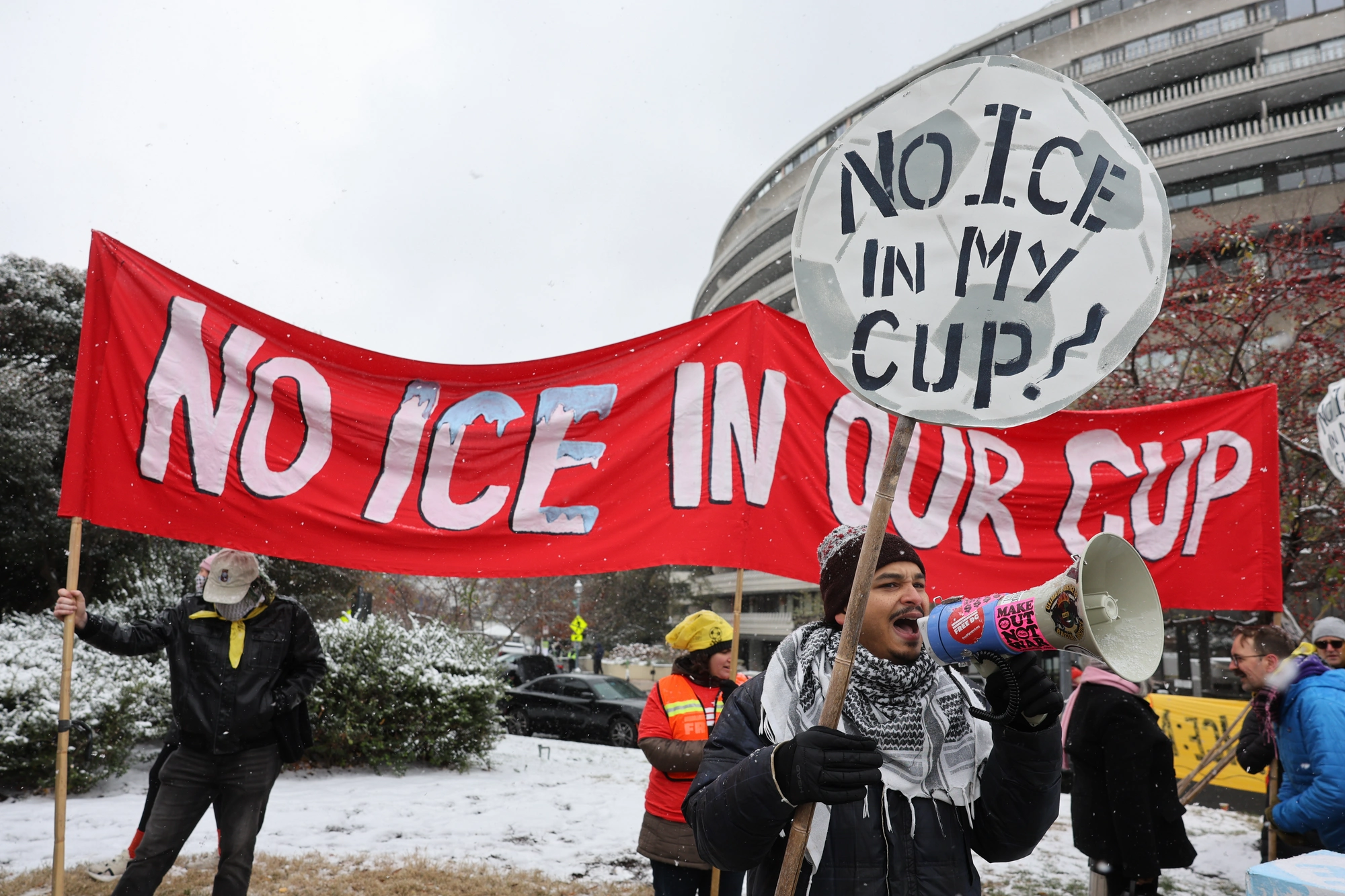
Despite recent reassurances from Secretary of State Marco Rubio to organizers in Miami, questions are continuing to swirl over whether federal immigration agents could still be deployed in host cities during the 2026 FIFA World Cup 2026.
The controversy began after Miami World Cup committee co-chair Rodney Barreto said Rubio personally assured him that Immigration and Customs Enforcement agents would not be stationed at stadiums during matches. “ICE is not going to be at the stadium,” Barreto told reporters, adding that the tournament would not become a “round them up” operation targeting immigrants.

But new reports suggest the issue may not be fully settled nationwide. According to officials cited by NBC News and other outlets, ICE personnel could still be used in some host cities as part of broader federal security operations surrounding the World Cup. Officials said agents may assist with crowd safety, investigations, or coordination with local law enforcement, though they would reportedly not be screening fans for immigration status.

The mixed messaging has sparked concern among immigrant advocacy organizations and some soccer fans, especially in cities with large immigrant communities such as Los Angeles, Houston, and Miami. Advocacy groups argue that even a visible ICE presence near transportation hubs, fan festivals, or surrounding neighborhoods could discourage attendance from international visitors and undocumented residents.

Officials in several host cities have attempted to calm fears. Houston’s World Cup security leadership recently stated that immigration enforcement “will not be a focus” during tournament operations, while Los Angeles organizers said there was currently “no indication” ICE would be deployed at major stadium events.
The United States is expected to host the majority of matches during the expanded 2026 tournament, with games scheduled across 11 American cities, including Miami, Los Angeles, Philadelphia, Seattle, Dallas, Atlanta, and New York/New Jersey.

For now, federal officials continue to insist that lawful visitors attending the World Cup “have nothing to worry about,” but the uncertainty surrounding ICE’s exact role has become an unexpected political storyline ahead of one of the world’s largest sporting events.