

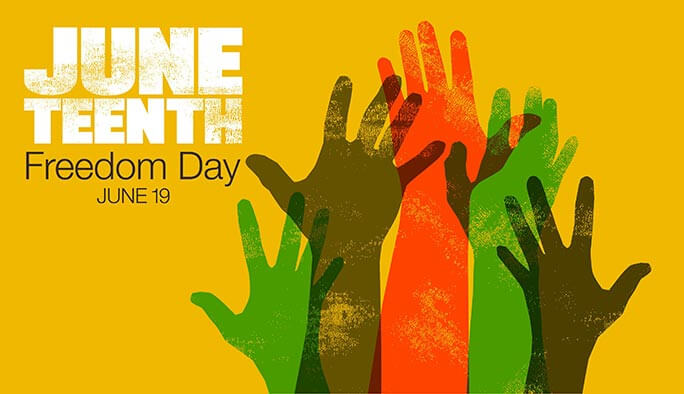
Across the United States, Americans are marking Juneteenth, a federal holiday that commemorates the end of slavery in the United States and celebrates African American freedom, resilience, and achievement.

The holiday traces its origins to June 19, 1865, when Union Major General Gordon Granger arrived in Galveston, Texas, and announced that enslaved people were free—more than two years after President Abraham Lincoln issued the Emancipation Proclamation on January 1, 1863. Because Texas was geographically isolated and had relatively few Union troops during the Civil War, many enslavers continued to hold people in bondage until federal authorities enforced emancipation.

The announcement, known as General Order No. 3, informed approximately 250,000 enslaved African Americans in Texas that they were legally free. The date became known as “Juneteenth,” a combination of “June” and “nineteenth.”
For generations, Black communities celebrated Juneteenth with parades, family gatherings, music, food, and educational events. In 2021, Juneteenth became an official federal holiday, recognizing its significance as a pivotal moment in American history.
Today, Juneteenth serves both as a celebration of freedom and as an opportunity to reflect on the nation’s long struggle for civil rights and equality.

Across the United States, Americans are marking Juneteenth, a federal holiday that commemorates the end of slavery in the United States and celebrates African American freedom, resilience, and achievement.
The holiday traces its origins to June 19, 1865, when Union Major General Gordon Granger arrived in Galveston, Texas, and announced that enslaved people were free—more than two years after President Abraham Lincoln issued the Emancipation Proclamation on January 1, 1863. Because Texas was geographically isolated and had relatively few Union troops during the Civil War, many enslavers continued to hold people in bondage until federal authorities enforced emancipation.
The announcement, known as General Order No. 3, informed approximately 250,000 enslaved African Americans in Texas that they were legally free. The date became known as “Juneteenth,” a combination of “June” and “nineteenth.”

For generations, Black communities celebrated Juneteenth with parades, family gatherings, music, food, and educational events. In 2021, Juneteenth became an official federal holiday, recognizing its significance as a pivotal moment in American history.
Today, Juneteenth serves both as a celebration of freedom and as an opportunity to reflect on the nation’s long struggle for civil rights and equality.