

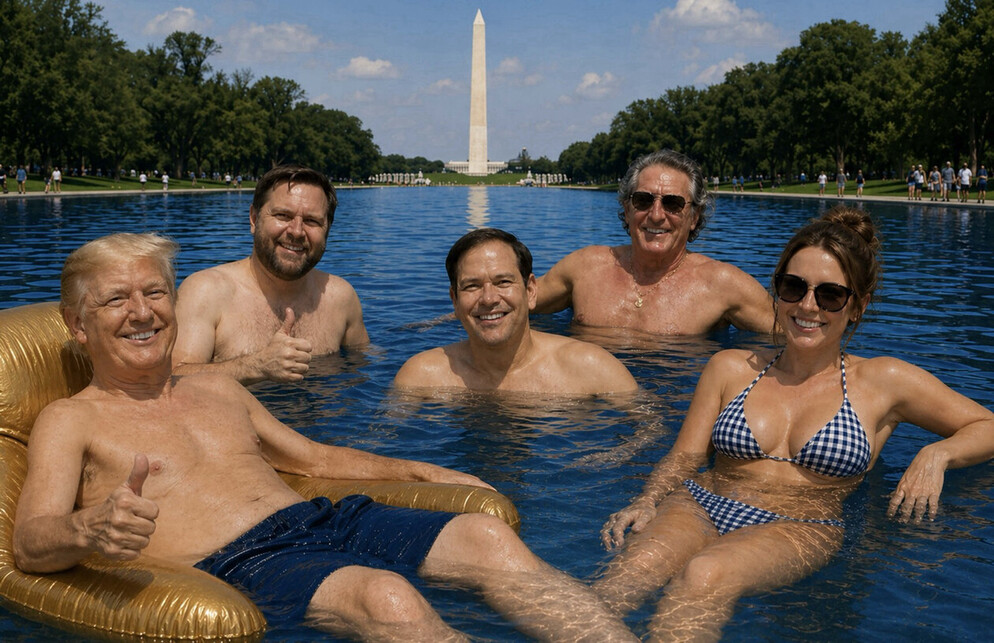
President Donald Trump’s controversial makeover of the Lincoln Memorial Reflecting Pool is drawing mounting backlash as costs continue to climb and protesters gather along the National Mall demanding the project be halted. What began as a plan Trump claimed would cost under $2 million has now ballooned into a project estimated at more than $13 million, according to federal records and court filings.

Earlier, he told reporters that the renovations would replace the current “gray stone” appearance with the color of a blue swimming pool.
“It’s really beautiful, and it’s going to be fantastic,” said Trump, according to the outlet. “It’s going to look better than it did in 1922 when it was built,” he said.

The renovation centers on repainting the historic Reflecting Pool basin in what the administration calls “American Flag Blue,” a dramatic departure from the landmark’s traditional gray stone appearance. Trump has defended the changes as part of a larger push to “beautify” Washington ahead of the nation’s 250th anniversary celebrations, but preservationists argue the redesign damages one of America’s most iconic memorial spaces.

A Washington nonprofit, The Cultural Landscape Foundation, filed a lawsuit this week seeking to stop the project, alleging the administration bypassed legally required historic preservation reviews before construction began. Protesters have also gathered near the memorial carrying signs criticizing the soaring price tag and accusing the White House of turning a national monument into a political vanity project.

The controversy intensified after reports revealed the work was awarded through a no-bid contract to a Virginia coatings company with previous ties to Trump properties. Critics have questioned why emergency procurement rules were used for what many see as an aesthetic redesign rather than an urgent repair.

Online reaction has been equally fierce, with social media users and local residents mocking the blue-tinted pool and warning taxpayers could ultimately face even higher restoration costs if future administrations reverse the changes.