

In a major overhaul of U.S. public health policy, federal officials have sharply reduced the number of vaccines routinely recommended for children, cutting the childhood immunization schedule from 17 to 11 universally advised vaccines. The change, announced Monday by the Department of Health and Human Services under Secretary Robert F. Kennedy Jr., takes effect immediately and reframes how doctors and parents approach childhood vaccination.
Under the new guidance from the Centers for Disease Control and Prevention, vaccines that had been broadly recommended for all children — including those for influenza (flu), rotavirus, hepatitis A and B, respiratory syncytial virus (RSV), and certain meningococcal diseases — will no longer be on the routine schedule. Instead, these vaccines are now advised only for children at higher risk of infection or based on shared clinical decision-making between parents and health care providers.
Health officials say the update aligns the U.S. more closely with immunization practices in other developed countries and aims to build greater public trust by focusing on a core set of vaccines seen as most critical. The CDC still recommends all children receive protection against serious diseases such as measles, mumps, rubella, polio, diphtheria, pertussis (whooping cough), Haemophilus influenzae type b, pneumococcal disease, varicella (chickenpox) and human papillomavirus (HPV).
The shift has drawn sharp reactions from pediatricians and public health organizations, many of whom argue the changes were made without traditional expert panel review and might increase the risk of outbreaks of preventable illnesses. Some leading medical groups have voiced concern that moving vaccines off the universal schedule could reduce uptake and complicate longstanding efforts to protect children from common infectious diseases.
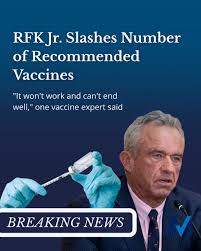
“Today’s announcement by federal health officials to arbitrarily stop recommending numerous routine childhood immunizations is dangerous and unnecessary. The longstanding, evidence-based approach that has guided the U.S. immunization review and recommendation process remains the best way to keep children healthy and protect against health complications and hospitalizations.”

For parents navigating this new landscape, experts recommend several practical steps: talk with your child’s pediatrician about your child’s individual risk factors; understand which vaccines are still universally recommended and why; and discuss any vaccines now placed in the shared decision-making category to make informed choices based on your child’s health history and local disease prevalence. Keeping immunizations up to date according to current CDC guidance and state requirements remains an important part of preventive health care.