

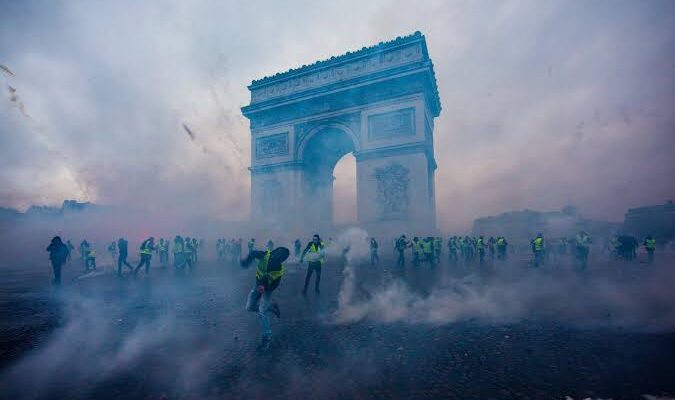
France is facing a growing security crisis after a weekend of mass protests, looting and violent clashes with police prompted the government to call for localized curfews, while demonstrations over the rising cost of living and economic pressures spread across several European countries.
French Prime Minister Sébastien Lecornu said Monday, October 19, that local authorities should introduce limited curfews in areas at risk of further violence. He has not ruled out a nationwide state of emergency, but said targeted restrictions were more appropriate for now. A blanket curfew in Paris is not planned at this stage.
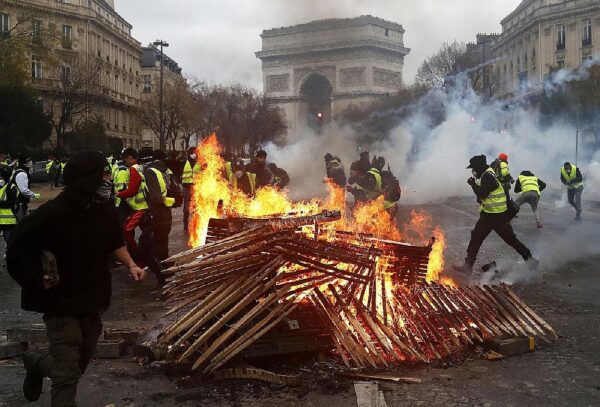
The unrest erupted Saturday after weeks of student demonstrations over deteriorating school conditions, teacher shortages and problems with university admissions expanded into a wider movement against rising prices, fuel costs and declining public services.
According to French authorities, approximately 550,000 people took part in demonstrations across the country. While many marched peacefully, violent groups clashed with police, set fires, broke into businesses and damaged public buildings.
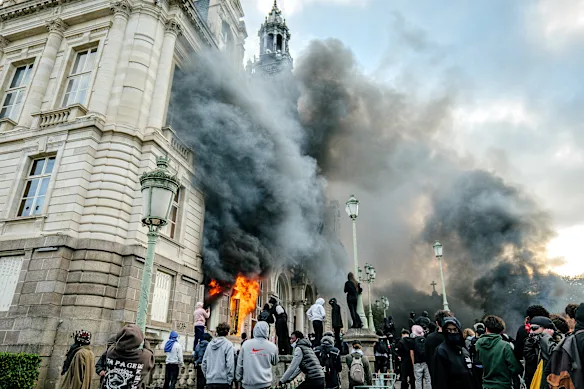
Paris, Marseille, Lyon and Bordeaux were among the cities affected. In Limoges, a historic town hall was devastated by fire, while shops and luxury boutiques in central Paris suffered vandalism and smashed windows. In Lyon, the city’s tourist office was attacked and set ablaze.
The scale of the destruction has intensified questions about whether authorities adequately anticipated the unrest. Interior Minister Laurent Nuñez offered to resign following criticism of the security response, but President Emmanuel Macron rejected his resignation and directed him to restore order and address reported intelligence failures.
Marseille has responded by banning public gatherings and demonstrations, while further student protests and blockades were reported in Paris on Monday, including near the Louvre Museum. French unions are also planning another round of strikes and rallies for November 5.
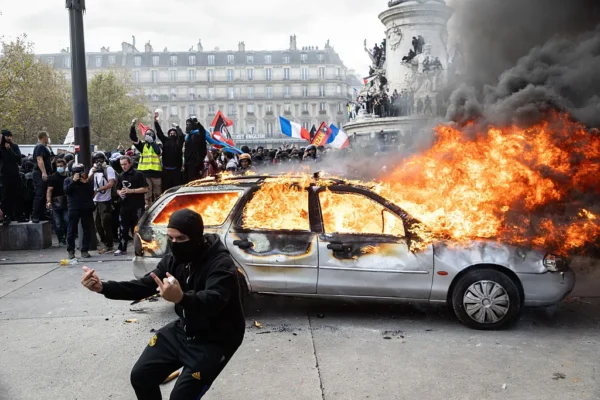
Protests Spread Across Europe
France is not alone in facing public anger. Demonstrations over the cost of living, housing affordability, fuel prices and economic insecurity have also taken place in Italy, Belgium, Portugal, Spain and Albania.
In Italy, protests in Milan and other cities included clashes with police and reports of looting. Belgian authorities used tear gas and water cannons during confrontations with demonstrators, while Albania has continued to experience unrest connected to corruption allegations, employment concerns and controversial development projects.
Although the demonstrations are not part of a single coordinated European movement, the grievances behind them share common themes: rising household expenses, dissatisfaction with government policies and frustration over public services.
Higher fuel prices, intensified by disruption to international oil supplies amid the war involving Iran, have added to the financial pressure facing households and businesses.
European governments are now monitoring the situation closely. Several countries, including Germany, Italy, Poland and the Czech Republic, have issued or updated travel advice urging their citizens in France to avoid demonstrations, steer clear of large crowds and follow instructions from local authorities.
Political Pressure Mounts
The unrest comes at a particularly sensitive time for Macron’s government, which is struggling with economic pressures and the challenge of passing a budget aimed at controlling France’s public finances. With the next French presidential election approaching in 2027, the demonstrations are adding to political tensions.
The government faces the difficult task of restoring public order while addressing the economic and social frustrations that have brought hundreds of thousands of people onto the streets.
Officials have emphasized that peaceful demonstrators should not be confused with those responsible for violence and looting. Nevertheless, the destruction has left businesses counting their losses and residents concerned about further disruption.
For now, France’s response is focused on localized security measures rather than a nationwide curfew. But with protests continuing and similar economic grievances fueling demonstrations elsewhere in Europe, authorities across the continent are watching closely to see whether the unrest intensifies in the days ahead.