

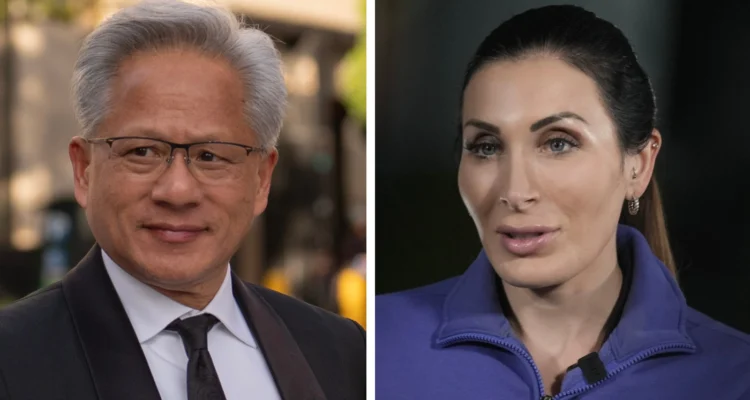
In a rare public break with President Donald Trump, one of his most outspoken supporters, far-right activist Laura Loomer, is taking aim at the president over his support for reinstating Nvidia CEO Jensen Huang.
Loomer, who has been among Trump’s most loyal defenders, is questioning why the president intervened in the controversy surrounding Huang, whose return to the helm of the powerful technology company has raised serious national security concerns.
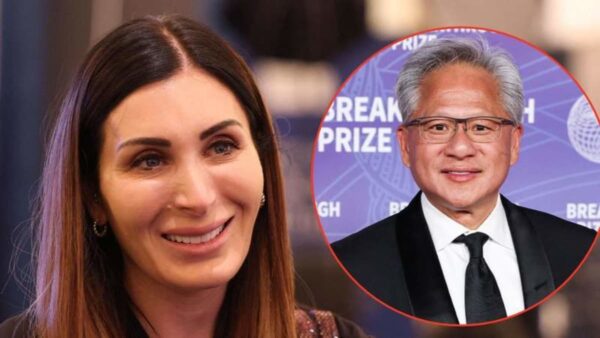
Nvidia’s board voted unanimously Monday to reinstate Huang, just 11 days after he stepped down amid reports of multiple extramarital affairs, including an alleged relationship with Alice Huang, a Chinese businesswoman suspected by U.S. authorities of having ties to Chinese intelligence.
Trump personally acknowledged that he had lobbied Nvidia’s board to bring Huang back, telling CNBC that he had spoken with board members directly and indirectly and strongly supported the decision.
But Loomer wasn’t buying it.
“Reinstating Jensen Huang is going to blow back on our national security,” she wrote on X.
She also questioned what she sees as a glaring double standard, comparing the allegations surrounding Huang to the controversy involving former Democratic Congressman Eric Swalwell, who faced intense criticism over his past association with suspected Chinese intelligence operative Christine Fang.
“People can like the guy personally, but why are we pretending like his relationship with an alleged Chinese spy isn’t the same thing (if not worse) that we all attacked Swalwell for?” Loomer wrote.
She went even further, warning that there must eventually be consequences for putting American national security at risk.
“Eventually there has to be accountability for jeopardizing U.S. national security,” she added. “China didn’t just get access to Nvidia chips by accident.”
The controversy is particularly sensitive because Nvidia manufactures some of the world’s most advanced artificial intelligence chips, which have become a critical component of the technological competition between the United States and China. Questions have also been raised about whether restricted Nvidia chips were improperly diverted to Chinese customers.
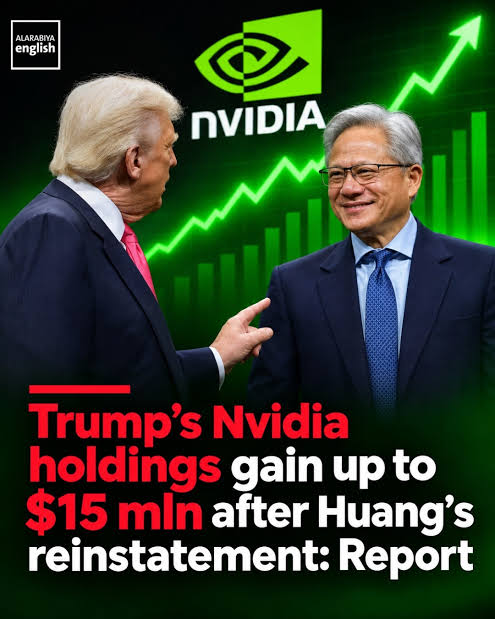
Trump, however, has defended Huang, saying he believes the CEO is an important figure in keeping America competitive in artificial intelligence. The president has also questioned whether the allegations against Alice Huang are accurate.
Loomer’s criticism represents an unusual moment of dissent from someone who has enjoyed extraordinary access to Trump, including meetings at the White House and Mar-a-Lago and trips aboard Air Force One.
She subsequently pushed back against suggestions that she had completely abandoned Trump, writing that she could disagree with the president over Jensen Huang and still support him.
Still, her comments expose an uncomfortable divide within Trump’s own political circle: how far should loyalty to the president go when national security concerns are involved?
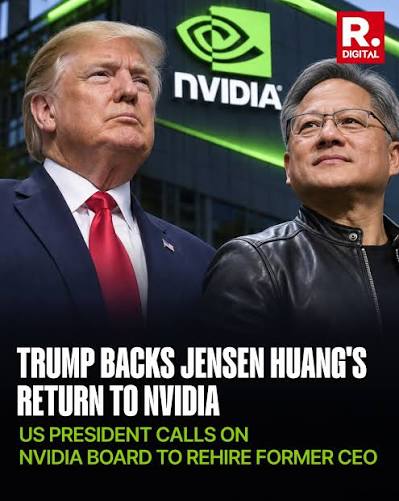
For someone who has built much of her public profile defending Trump and attacking his critics, Loomer’s willingness to challenge one of his decisions is noteworthy. And her warning that the Nvidia controversy could haunt Republicans suggests this disagreement may not disappear anytime soon.