

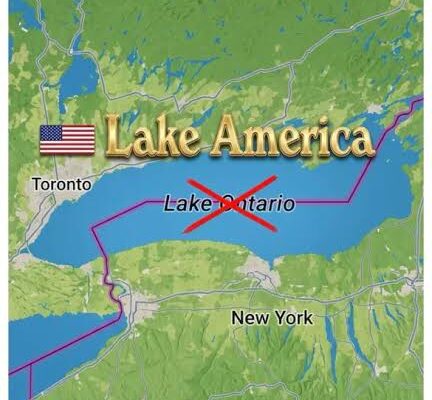
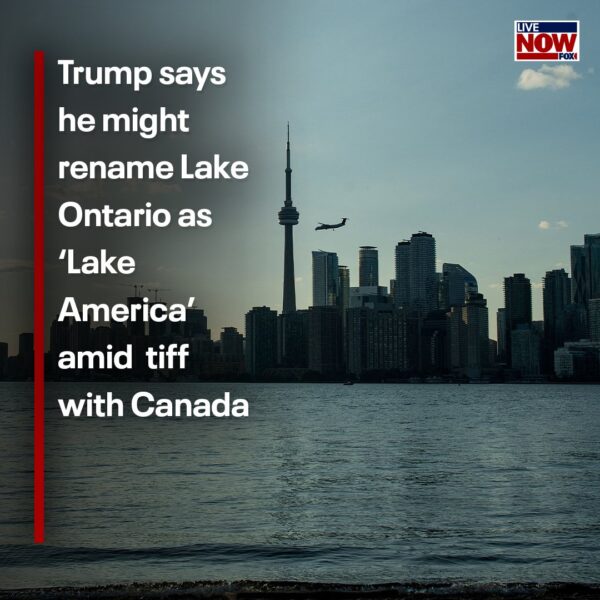
Trump has opened a new front in his increasingly bitter trade war with Canada — suggesting that Lake Ontario could be renamed “Lake America.” (Remind anyone of the Gulf of Mexico debacle?)
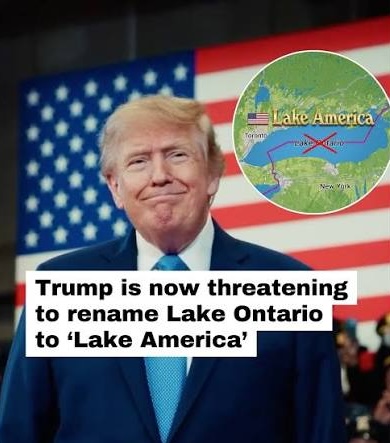
Trump made the declaration Tuesday on Truth Social, saying the United States was giving “serious consideration” to changing the name because he did not expect the U.S. to be “doing much business with Ontario any longer.”
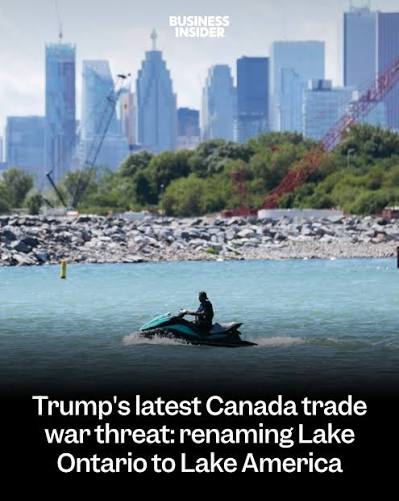
The provocative proposal comes as relations between the longtime allies deteriorate rapidly following the collapse of trade negotiations. The Trump administration has imposed 50% tariffs on roughly $20 billion worth of Canadian goods, while Canada is preparing retaliatory tariffs on more than 700 American products, including steel, dairy products, appliances, seafood and farm equipment.
Trump has also threatened additional 50% tariffs on Canadian vehicles, auto parts and steel, potentially putting further pressure on Ontario, Canada’s most populous province and the center of much of its auto industry. Prime Minister Mark Carney has accused Washington of trying to undermine major Canadian industries.
Lake Ontario, however, is not simply an American body of water. The Great Lake straddles the international border, with New York on its southern and eastern shores and Ontario — including Toronto — on its northern shore. The lake is jointly managed by the United States and Canada through international agreements and agencies.
That means Trump could potentially establish a new name for the lake for official U.S. federal use, much as he did with the Gulf of Mexico, which his administration renamed the “Gulf of America.” But the United States cannot dictate what Canada or international organizations call the shared waterway.
Wisely, Canadian officials have largely declined to engage with Trump’s social-media provocations. Canada’s minister responsible for U.S. trade, Dominic LeBlanc, said the federal government has decided not to respond to the administration’s daily social-media posts.
The proposed name change nevertheless adds another symbolic layer to an increasingly serious economic confrontation. What began as a dispute over tariffs and trade has now spilled into rhetoric about national sovereignty, Canada’s industries and even the names of shared North American landmarks.
For two countries whose economies and supply chains are deeply intertwined, the fight over Lake Ontario’s name may be largely symbolic — but it underscores just how dramatically the relationship between Washington and Ottawa has deteriorated.