

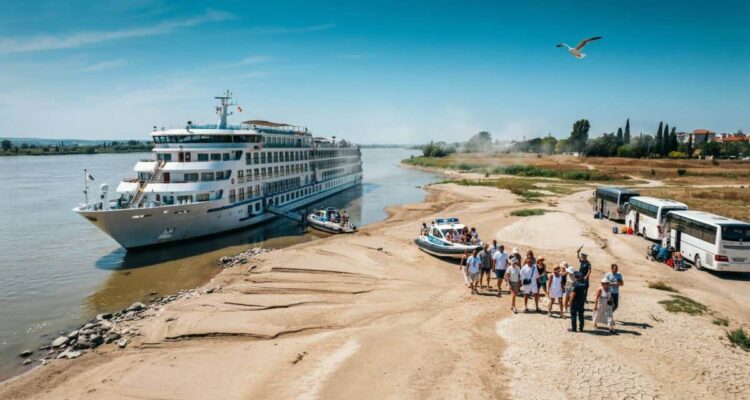
Europe’s legendary river cruises are facing an unusual problem this summer: in some places, there simply isn’t enough water.
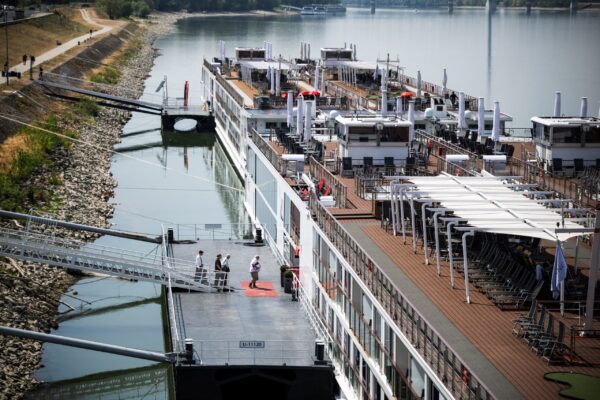
On July 28, a Viking river ship ran aground while sailing along the Danube. Passengers had to be carefully brought onshore and then travel the rest of the journey by bus.
Not exactly the same glamor as cruising a river.
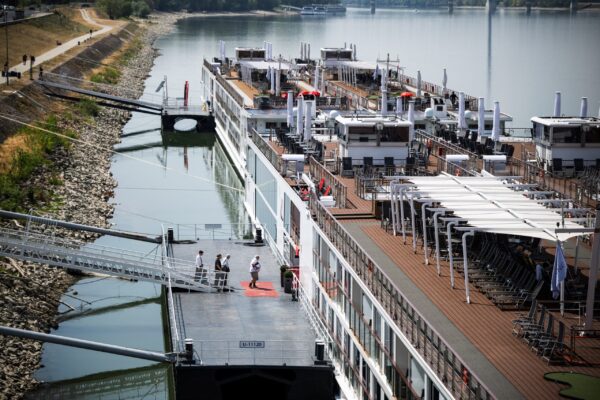
A prolonged drought and a series of intense heat waves have pushed water levels on major waterways including the Danube and Rhine to historic lows, creating headaches for cruise operators and passengers during one of the busiest seasons for European river travel.
For travelers with a Danube, Rhine, Main or Moselle cruise booked—or anyone thinking about booking one—the situation doesn’t necessarily mean canceling your vacation. But it does mean being prepared for your itinerary to look different than the brochure promised.
The Danube Has Been Hit Especially Hard
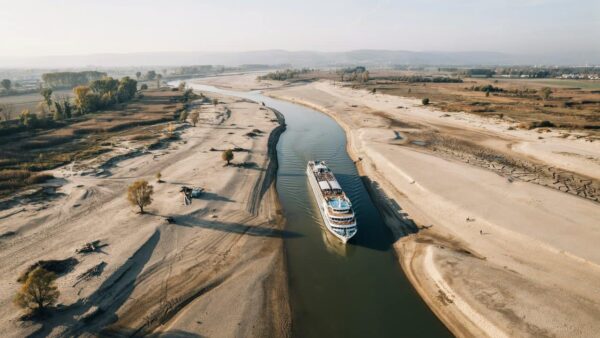
The Danube has become one of the most visible casualties of Europe’s drought. Water levels have fallen dramatically through parts of Hungary, Serbia, Croatia, Romania and Bulgaria.
In Romania, the river recently reached its lowest level since 1996. In Budapest, the Danube has fallen to extraordinarily low levels, exposing sandbars and parts of the riverbed that are normally underwater. And there has already been a dramatic warning for cruise passengers.
A Viking river vessel, the Viking Ullur, reportedly ran aground on the Danube with about 185 passengers aboard after encountering critically low water levels. Passengers had to be evacuated after the ship became stranded.
The incident is an extreme example—not the typical experience for river cruisers—but it illustrates why cruise companies are watching water levels so closely.
What Happens When a River Gets Too Shallow?
Unlike an ocean cruise, where a ship can generally continue toward its next port, a river ship has a very specific channel in which it can safely operate.
When water levels become too low, cruise lines have several options:
Ship swaps. Passengers may be transferred from one ship to another on a navigable section of the river.
Bus transfers. Instead of sailing between two destinations, passengers may travel by coach and meet the ship farther downstream.
Changed ports. A ship may skip a scheduled stop and substitute another destination.
Different excursions. Shore excursions can be reorganized around whatever parts of the itinerary remain accessible.
Hotel stays or shortened sailings. In more serious situations, cruise companies may use hotels or alter the sailing altogether.
These are established contingency measures. Most low-water disruptions do not mean the entire vacation is canceled.
The Rhine Is Also in Trouble
The Danube isn’t the only major European river experiencing problems.
Parts of the Rhine in Germany have reached exceptionally low levels, with the situation particularly serious around known navigation bottlenecks. Commercial shipping has been heavily affected, and cruise operators have also had to monitor conditions and adjust plans.
The Middle Rhine Valley—the spectacular section famous for castles, vineyards and dramatic scenery—is particularly sensitive to water-level changes.
For cruise passengers, that can mean the very scenery they booked the cruise to see may still be accessible, but getting there could involve a bus ride rather than sailing.

What Should Travelers Do?
If you already have a river cruise booked, don’t panic—but don’t assume everything will operate exactly as advertised, either.
1. Check with your cruise line before leaving home
Ask specifically about water levels along your itinerary, rather than simply asking whether the river is “low.” Conditions can vary dramatically from one section of a river to another.
2. Read the fine print
Most cruise contracts give operators considerable flexibility to change ports, transportation and itineraries because of weather and navigational conditions.
Understand what your cruise company considers a cancellation, a major itinerary change and a normal operational adjustment.
3. Consider travel insurance carefully
If you’re booking a future cruise, look at policies that provide meaningful coverage for trip interruption and cancellation. Travelers who want the greatest flexibility should investigate cancel-for-any-reason coverage, where available, rather than assuming ordinary travel insurance covers every water-level-related change.
4. Pack for bus rides
This may sound obvious, but it’s important.
If your cruise is affected, you could find yourself spending several hours on a coach instead of relaxing on a riverboat. Comfortable clothing, walking shoes, water, snacks and portable entertainment can make a major difference.
One recent Danube sailing involved multiple bus transfers after the ship could no longer navigate a particular section of the river.
5. Expect some flexibility
The best attitude may be to think of a 2026 European river cruise as a vacation with a moving itinerary.
You may not see every scheduled port. You may spend more time on buses. You could board a different ship or arrive at a destination by road.
But you can still experience European cities, castles, vineyards, food and villages—and cruise lines have considerable experience adapting when rivers become temporarily unnavigable.
Should You Cancel Your River Cruise?
For most travelers, not necessarily.
River cruising companies have dealt with both high and low water for years. What’s different this summer is the scale and persistence of the drought.
The 2026 conditions are a reminder that European river cruising is, quite literally, dependent on the weather. Climate-driven heat and drought are making extreme water conditions an increasingly important consideration for travelers.
If you’re willing to accept an occasional bus ride, a changed port or a surprise in your itinerary, your European river cruise can still be a wonderful trip.
Just remember: when you’re cruising a river, the river gets the final say.