

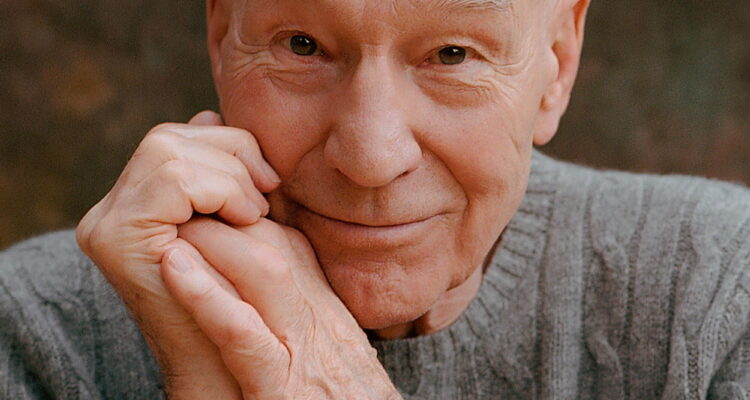
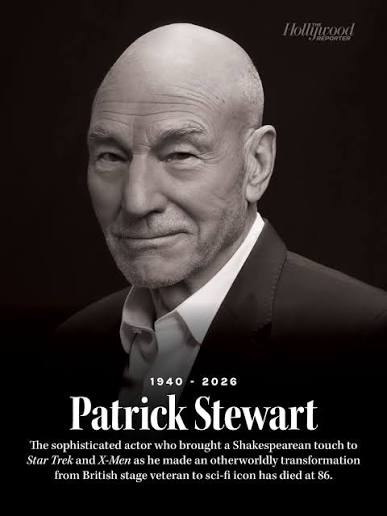
Sir Patrick Stewart, the commanding, deeply human actor who boldly went where few performers had gone before — from the Shakespearean stage to the far reaches of the Starship Enterprise — has died at 86. The celebrated British actor died Wednesday, October 28, 2026, at his Los Angeles home, following a brief battle with Alzheimer’s disease and Lewy body dementia, according to reports.
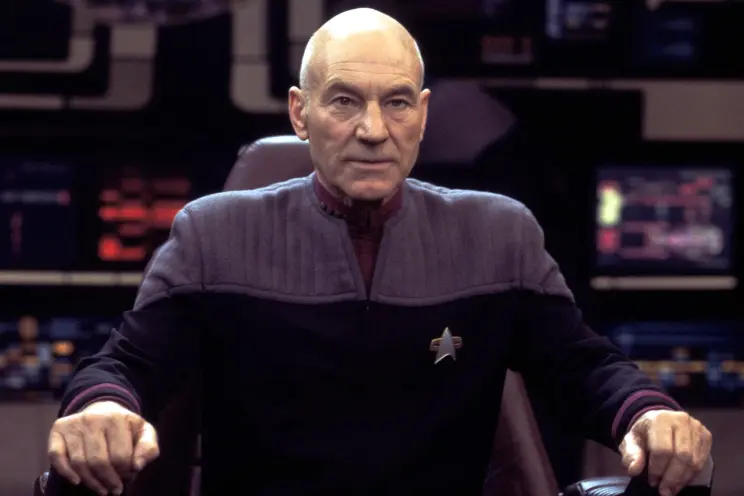
For millions of fans, Stewart will forever be Captain Jean-Luc Picard, the thoughtful, dignified commander of the USS Enterprise in Star Trek: The Next Generation. With his unmistakable voice, piercing gaze and quiet authority, he transformed a science-fiction television role into a portrait of leadership, compassion and intellectual curiosity. His famous command, “Make it so,” became a cultural catchphrase, while his portrayal of Picard helped redefine what a science-fiction hero could be.
But to describe Stewart simply as a Star Trek star would be to tell only part of his remarkable story. Long before he became an intergalactic icon, he was a serious, classically trained actor whose heart belonged to the theater.
Born July 13, 1940, in Mirfield, Yorkshire, England, Stewart grew up in a working-class family and developed his craft through years of dedication to the stage. In 1966, he joined the prestigious Royal Shakespeare Company, where he spent 14 years performing in some of the greatest works in the English theatrical tradition.
Stewart tackled Shakespeare’s most demanding roles, including Macbeth and Claudius in Hamlet, establishing himself as an actor of extraordinary range and discipline. He brought the same intensity to modern drama, appearing alongside his longtime friend Ian McKellen in acclaimed productions of Samuel Beckett’s Waiting for Godot and Harold Pinter’s No Man’s Land.
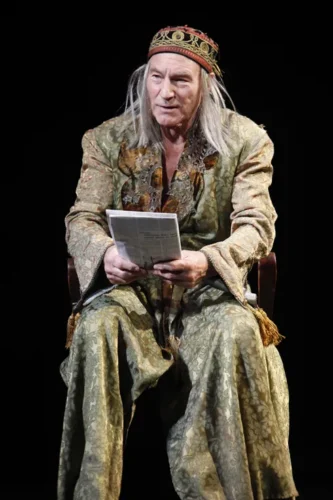
His theater career was not a footnote to his Hollywood success. It was its foundation.
Stewart’s ability to command a stage with little more than his voice and presence made him a natural for Shakespeare, but it also gave his screen performances a rare depth. His Picard was not simply a starship captain; he was a man of principle, a diplomat, a philosopher and, at times, a deeply vulnerable human being.
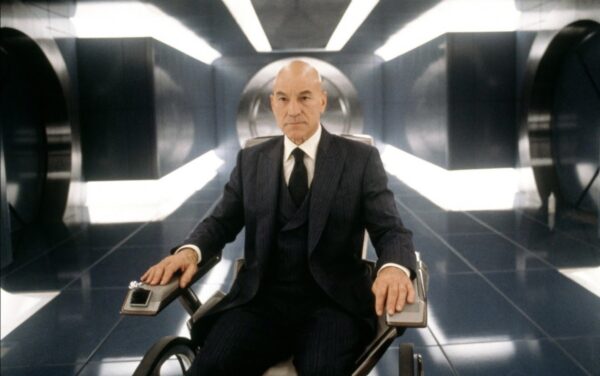
Beyond Star Trek, Stewart won another generation of admirers as Professor Charles Xavier, the wise and compassionate leader of the X-Men in the blockbuster film franchise. His performance brought gravitas and emotional complexity to the superhero genre, particularly in Logan, where he delivered one of his most moving screen portrayals.
His achievements earned him two Laurence Olivier Awards and a Grammy Award, among other honors. In 2010, Queen Elizabeth II knighted him for his services to drama, formally recognizing a career that had already made him one of Britain’s most distinguished actors.
Stewart also used his public platform to support causes close to his heart, including efforts to help survivors of domestic abuse and humanitarian work through the International Rescue Committee. His own difficult childhood informed his commitment to speaking out against domestic violence.
Away from the spotlight, Stewart shared his life with singer-songwriter Sunny Ozell, whom he married in 2013. He is survived by Ozell and his two children, Sophia and Daniel.
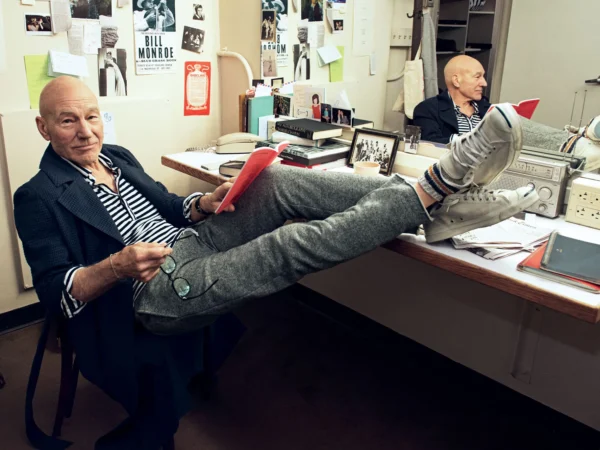
What made Stewart so special was his ability to make intelligence compelling, authority reassuring and even the most fantastical characters feel profoundly real. He could deliver Shakespeare with theatrical fire, navigate the moral dilemmas of deep space and bring warmth to a superhero whose greatest power was his belief in humanity.
The final curtain has fallen on a remarkable life in the arts. But Sir Patrick Stewart’s legacy will continue to travel far beyond the stars — and long after the last curtain call.