


A new report about Trump’s longtime aide Natalie Harp is raising fresh questions about security inside the White House and how someone with extraordinarily close access to the president was permitted to work for more than a year without completing the routine security-clearance process.

According to reporting by MS NOW, Harp repeatedly declined or delayed seeking the clearance normally required for West Wing staffers. Concerns reportedly grew among White House lawyers and security officials before Trump himself intervened. Harp eventually completed the necessary paperwork and, according to the White House, now has a security clearance.
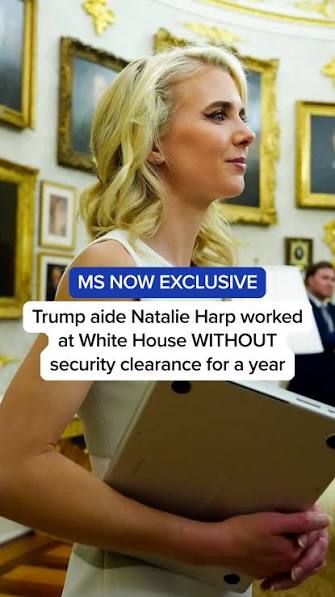
The revelation is particularly significant because Harp was not an ordinary staffer operating somewhere down the chain of command. She has become one of Trump’s closest aides and is frequently within feet of the president, including during meetings and presidential travel. Sources cited by MS NOW said her proximity potentially gave her access to sensitive conversations and information.
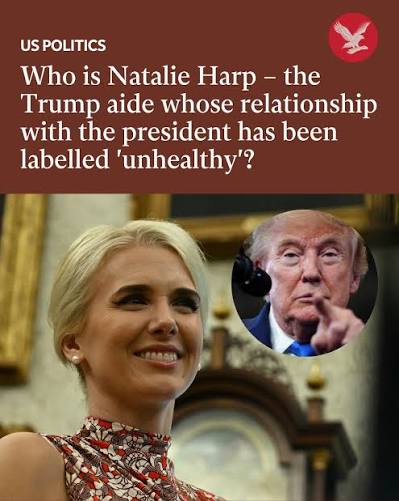
That raises an obvious national-security question: How could someone with such extraordinary access to the president operate inside the White House for so long without completing the standard background-investigation process?
A security clearance is designed to help determine whether an individual can safely have access to classified information and sensitive government operations. The process includes extensive questions about a person’s background, finances, residences and foreign contacts.
The issue is especially striking given Harp’s role as a gatekeeper around Trump. Reports describe her as someone who controls information reaching the president, prints material for him to review and assists with his social-media posts. Some White House officials have reportedly been frustrated by the extent of her access.
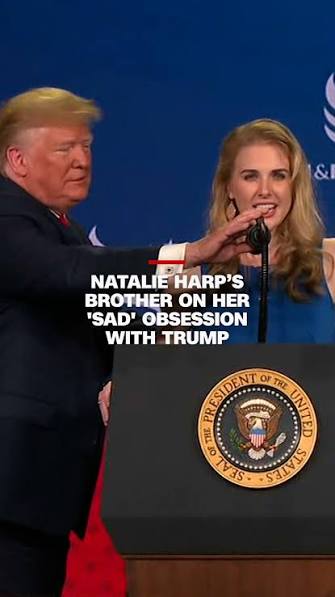
The controversy also brings renewed attention to Harp’s role in Trump’s secret departure from Turkey last month. When a credible Iranian missile threat prompted a covert change in Trump’s travel plans, Harp was among a small group of aides who accompanied the president during the secret transfer to another aircraft. Trump and several aides were moved discreetly while other senior officials, including Secretary of State Marco Rubio and Treasury Secretary Scott Bessent, remained aboard the aircraft being used as a decoy.
In other words, Harp was on the special flight with Trump — not the decoy Air Force One. That detail makes questions about her security status even more consequential, because she was trusted to accompany the president during an operation triggered by a serious national-security threat.
The White House has pushed back on the controversy.
Still, the timing and circumstances are likely to fuel congressional and national-security scrutiny. The central issue isn’t simply whether Harp now has a clearance. It is why a presidential aide with unusually intimate and sustained access to the commander in chief was apparently allowed to remain in that position for so long before completing the process.
For critics, the episode raises a broader question about the Trump White House: Are traditional security safeguards being applied consistently to everyone who has access to the president?